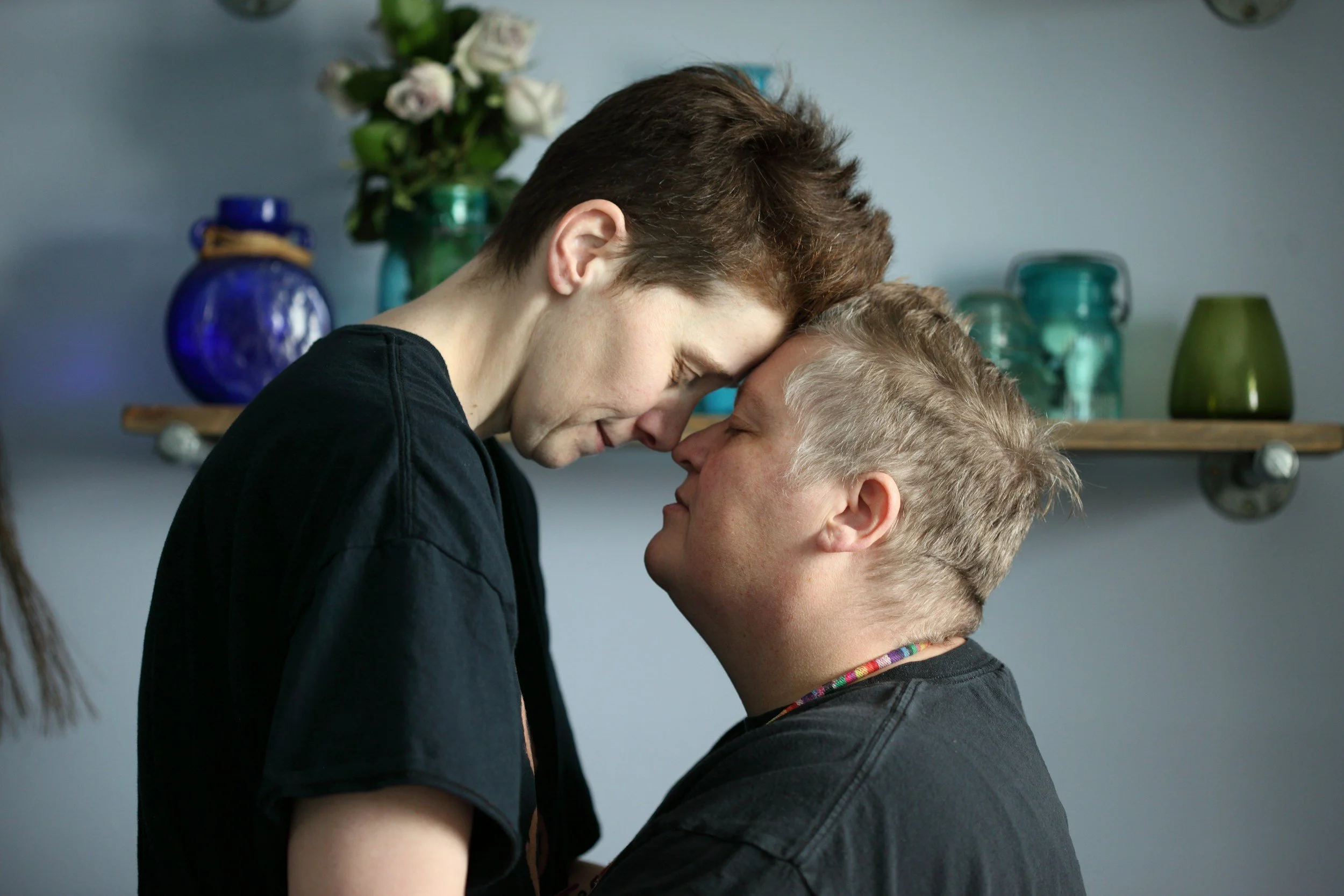
Picture this scene: You and your partner just got home from a dinner party with friends. Throughout the night, you were engaged, smiling, making great conversation, and laughing at every joke. But the second the front door closes behind you, a heavy curtain falls.
You collapse onto the couch, stare at the ceiling, stop talking, and retreat into your phone—or go straight to a dark, quiet room.
Your partner stands in the kitchen, confused and hurt. "You were having so much fun 20 minutes ago," they think. "Did I do something wrong? Why are you giving me the cold shoulder?"
If you are an adult with late-diagnosed ADHD, Autism, or AudHD, this scene isn't about pulling away from your partner. It’s the physical, cognitive, and sensory crash that happens after hours of masking.
What Is Neurodivergent Masking?
Masking (also called camouflaging) refers to the conscious or subconscious strategies neurodivergent individuals use to suppress their natural traits and blend into a neurotypical world.
While neurotypical social interaction happens largely on autopilot, masking requires continuous manual effort:
Forcing eye contact even when it feels intensely overwhelming.
Suppressing self-soothing behaviors (stimming) like leg bouncing, pacing, or fidgeting.
Scripting conversations in advance to make sure you say the "right" thing.
Swallowing sensory discomfort—tuning out bright fluorescent lights, background chatter, or uncomfortable clothing while pretending everything is fine.
To the outside world, masking looks like success. But internally, it operates like running twenty background apps on a phone with a 5% battery.
Why the Masking Crash Affects Relationships
The biggest tragedy of masking is that it drains energy from the exact people who matter most.

When a neurodivergent adult spends 8 hours masking at work or 3 hours masking at a family gathering, they return home with zero remaining bandwidth. Home is the one place where it is safe to drop the mask—which means their partner sees the immediate aftermath: silence, irritability, flat affect, or intense sensory sensitivity.
Without context, a partner might misinterpret this crash as:
"They don't care about me anymore."
"They give all their best energy to work/friends and leave me with the scraps."
"They are mad at me."
In reality, unmasking in front of a partner is actually a profound compliment. It means: "I trust you enough to stop pretending."
What Neurodivergent Adults Wish Their Partners Knew

If you are trying to explain this dynamic to your partner—or if you are the partner trying to understand—here are three core truths to keep in mind:
1. The Need for Silence Is Not a Rejection
When a neurodivergent person experiences sensory or cognitive overload, processing words takes immense effort. Wanting quiet or time alone isn't a sign of pushing you away; it’s a necessary biological reset so they can engage with you fully later.
2. Sensory Overload Can Look Like Anger
When the nervous system is overwhelmed by noise, light, or demands, the body enters a fight-or-flight state. Short answers, a sharp tone, or sudden irritability are often signs of sensory distress, not relational conflict.
3. Unmasking Takes Time and Safety
If someone has masked their entire life to avoid criticism or rejection, dropping the mask feels terrifying. They might fear that if you see their true stims, hyperfixations, or processing speed, you won't love them the same way.
Practical Takeaways: How to Create a Mask-Safe Relationship
Building a relationship where both partners feel supported doesn't mean ignoring anyone's needs—it means designing a system that works for two different nervous systems.
1. Design "Decompression Buffers"
Establish an explicit agreement for post-work or post-social events. Instead of jumping straight into deep conversation or chores, build in a mandatory 20–30 minute "low-demand buffer" where both partners can transition without expectation.
2. Use a "Capacity Scale" (1 to 5)
When processing language is tough, long discussions about how you feel are exhausting. Use a simple numerical check-in:

5: "Full battery! Ready to talk, help with dinner, and hang out."
1: "Battery depleted. Need dark room, headphones, and quiet for an hour." This gives your partner immediate clarity without requiring you to explain or justify your state.
3. Embrace "Parallel Play"
Connection doesn't always require eye contact or active dialogue. Parallel play—being in the same room doing your own separate activities (e.g., one person reading with noise-canceling headphones while the other watches a show)—allows you to build intimacy without sensory overload.
Unmasking Is an Invitation to Real Intimacy
Masking may help neurodivergent adults navigate a world that wasn't built for them, but home should be the sanctuary where the mask can safely come off. When partners learn to understand the hidden fatigue of masking, a shut-down state shifts from being a source of conflict into an opportunity for deep attunement and care.
If you or your partner are navigating adult neurodivergence, late diagnosis, or relational burnout, our neurodivergent-affirming therapists are here to help. Reach out today to set up a consultation and build a partnership that works for both of your minds.